22
Juli
The influencer landscape shifted. Most brands are still paying 2024 prices for 2026 results.
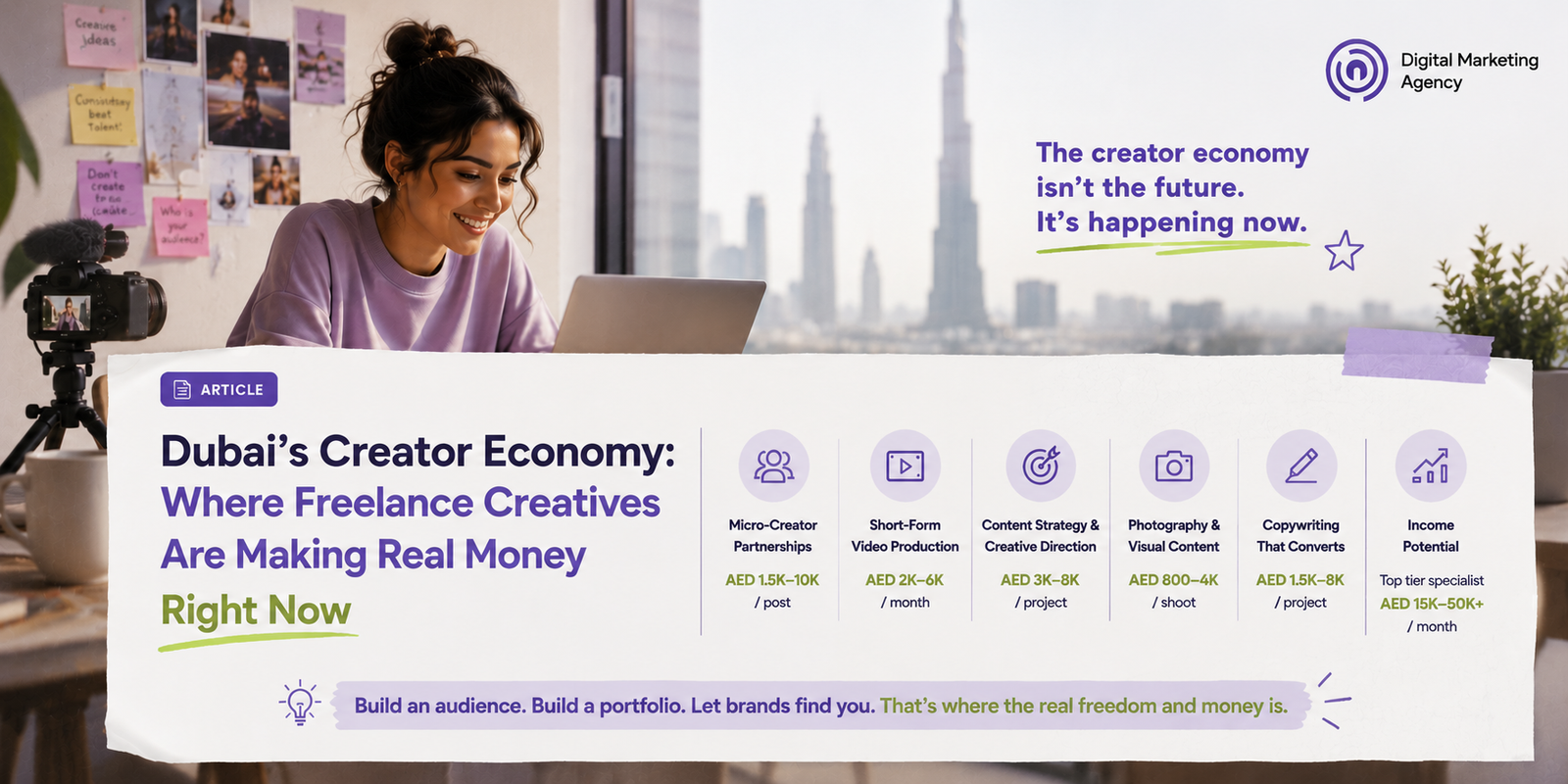
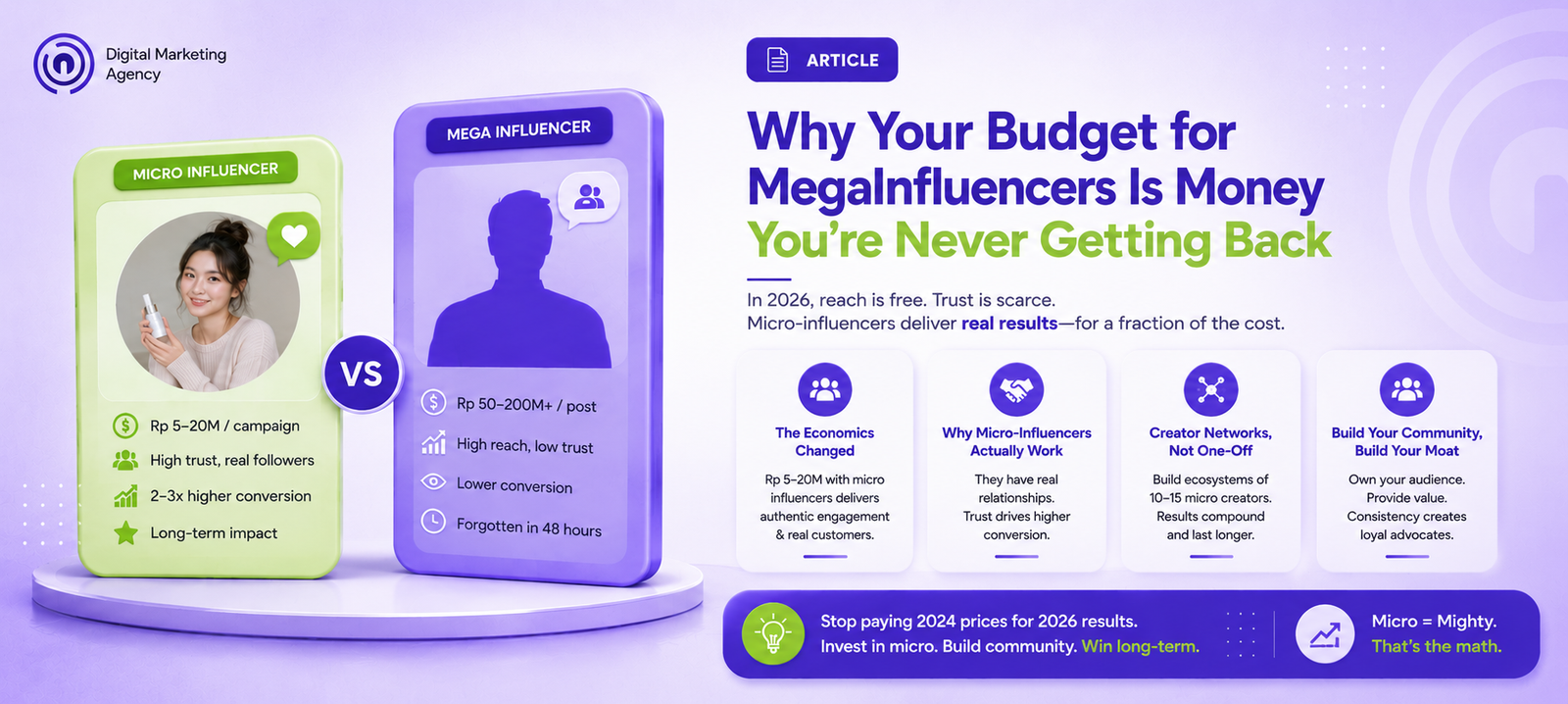
Here's what's happening: A founder with 50K authentic followers on TikTok converts customers at 2-3x the rate of someone with 500K generic followers. A niche newsletter with 8K engaged readers drives more revenue than a broadcast to 200K passive followers. A micro-community that actually cares about your brand is worth infinitely more than a paid mention that disappears in 48 hours.
This isn't sentimental. It's math.
And most Indonesian brands are still allocating resources like the old rules apply.
The Economics Changed
Mega-influencer campaigns have always been expensive. But they used to work because reach wasscarce. In 2026, reach is free. It's engagement and trust that are scarce.
The cost to work with a mega-influencer? Rp 50-200 million+ per post. What you get: visibility spike, maybe some brand awareness, quickly forgotten.
The cost to build real relationships with 5-10 microinfluencers in your niche? Rp 5-20 million. What you get: authentic recommendations, sustained engagement, actual customers who keep buying.
The influencer economy didn't die. It redistributed. The advantage went to brands that realized micro = mighty.
Why Micro-Influencers Actually Work
Simple: They have real relationships with their audience.
A micro-influencer recommends a product because they genuinely use it or believe in it. Their followers know this. Trust is already built. When they recommend, people listen.
A mega-influencer mentions a product because they were paid. Their followers know this too. Engagement is lower. Conversion is lower. But the invoice is higher.
This creates an interesting dynamic: you're paying more for worse results.
The brands winning? They're the ones who stopped treating influencer marketing like a broadcast channel and started treating it like partnership building.
The New Strategy: Creator Networks, Not One-Off Campaigns
Instead of one big campaign with one influencer, think ecosystem.
Identify 10-15 micro-influencers across different micro-communities that overlap with your target customer. Build relationships. Collaborate on content that feels native to their channels, not like an ad. Measure which conversations actually convert.
The cost? Distributed and lower. The results? Compound. You're not buying one moment of attention; you're building ongoing presence in multiple communities simultaneously.
For a Rp 100 million budget, that's 5-10 strategic micropartnerships instead of 2-3 mega-mentions. The math on conversion is dramatically different.
The Community Layer (This Is Where Real Leverage Is)
But here's the secret move that most brands still miss: mega-influencers are one-way broadcasts. Real growth comes from building your own community.
A community of people who actively engage with your brand, recommend it unprompted, and keep coming back. They're your customers. Your advocates. Your competitive moat.
Building this requires:
Actual value, not just transactions. A newsletter that teaches something. A community space where people feel heard. Content that solves real problems.
Consistency. Not sporadic campaigns. Sustained presence. Regular engagement. Showing up even when you're not selling something.
Authentic voice. Not corporate speak. Real perspective. Personality. Perspective that makes people want to stick around.
This takes time. It's the opposite of fast growth marketing. But by end of 2026, a brand with 5K truly engaged community members will have more customer lifetime value than a brand that spent the same money chasing reach through paid influencer campaigns.
The Hybrid Play (Do Both, But Allocate Differently)
You don't have to choose. But you need to be intentional about allocation.
70% on building organic presence and community: SEO, content creation, owned channels, microinfluencer partnerships, community engagement.
30% on paid media: Quick wins, seasonal campaigns, retargeting, testing new channels.
Most brands do the opposite. They spend 70% on paid and hope organic takes care of itself. Then wonder why their customer acquisition cost keeps rising.
For Brands in Indonesia Specifically
The micro-influencer ecosystem in Indonesia is mature and efficient. You have access to creators across every niche—beauty, tech, lifestyle, B2B, finance. The creator economy here isn't underdeveloped; it's just been overlooked by brands still thinking in mega-influencer terms.
The opportunity? You can build sustainable, costeffective influencer strategy right now. While competitors are still negotiating mega deals, you canbe systematically building presence across 20 microcommunities.
The Risk of Waiting
Every quarter you're not actively building community is a quarter your competitors are.
By end of 2026, brands that made the shift to microinfluencer networks + organic community building will have:
Brands that didn't? They'll still be paying Rp 100 million for one flashy campaign that delivers the same results as five micro-partnerships.
What to Do Monday Morning
The shift isn't coming. It's here. The brands moving now will look genius in 18 months. The ones waiting will be wondering where the ROI went.
Your next biggest customer isn't scrolling megainfluencer feeds. They're in a niche community where a micro-influencer they trust is sharing genuine recommendations. That's where you should be.